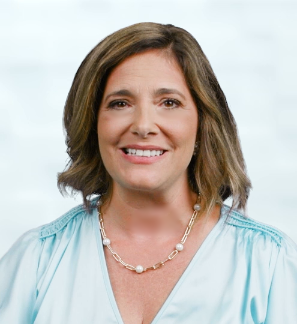
Complexities of Medicare, Including Options for Those Turning 65 Transcript
Speaker 1 00:00
No need to lose sleep over planning your Medicare coverage. Lisa Lauro and the team at Secure Money Health want you to get the best, most customized service when planning your Medicare coverage. In fact, Lisa wants to share her new book with you, The Ultimate Medicare Book. It’ll help you choose the right plan, understand your benefits and avoid common pitfalls. Go to mymedicarebook.com. That’s mymedicarebook.com.
Speaker 2 00:30
It’s time to secure all your health care needs, and we will really simplify the process. Welcome to Secure Health with Lisa Lauro.
Steve Sedahl 00:38
Hey. Welcome in, everybody. This is Secure Money Health Radio, where Medicare matters. Lisa Lauro’s here. Lisa is why Medicare matters, because she knows, well, a whole lot about Medicare. I won’t say everything, because nobody knows everything. Hi, Lisa. How are you?
Lisa Lauro 00:58
I’m good. How are you?
Steve Sedahl 01:01
Very, very well. Thanks. I, you know, we’ve got a lot of stuff to talk about, and I find it, I find this show interesting, because you just don’t realize how deep Medicare is and how many different paths there are to go down. And it doesn’t matter if you’ve been on Medicare for a day, or you’re going to be on next year, or you’ve been on it for 10 years. Wow. It’s a lot going on.
Lisa Lauro 01:23
There’s a lot to learn. And I’ll be honest, I mean, there are things that I learn, you know, even day to day, and I’m like, wow, that’s, that’s interesting, you know? So not only is there a lot to a lot to learn, but there’s also, it’s constantly evolving, you know? So, there’s a lot of changes that take place, that you have to kind of be up on top of and things like that. So, yeah, there’s a lot to it.
Steve Sedahl 01:45
You certainly are, because you wrote the book on Medicare. It’s called The Ultimate Medicare Book, Simplifying Medicare So You Can Make Confident and Informed Decisions. And Lisa is ready to give you a book for free, if you just, you know, give us a call or visit, actually visit the medicarebookoffer.com medicarebookoffer.com and the book is on the way to you, just like that.
Lisa Lauro 02:05
That’s right. Yep, it’ll come right to your mailbox. So,
Steve Sedahl 02:10
All right. Fair enough. And so, let’s jump in. What do we, we’ve got a lot to talk about. We in the last couple of weeks, we’ve, we covered a lot of questions, and apparently you’ve been getting a lot more. So, let’s dig into some questions based on other questions.
Lisa Lauro 02:22
Okay, that sounds great.
Steve Sedahl 02:24
So, you got the first one here. It says, “What is a private fee for service plan?” Or, “What is a private fee for service plan?” There’s something new. I don’t know. What is it?
Lisa Lauro 02:31
Yeah. So, they’re not very common, but they do exist. So that’s a good question, because if, if someone comes across it, they may know, they may, you know, just like yourself, well, what is that, you know? So, it is a type of Medicare Advantage plan, okay? And it basically, what’s nice about it is that there aren’t any networks that you really have to abide by, where that’s the big thing with the Medicare Advantage plans is that you have to kind of be sure that your doctor’s in the network. If you’re on an HMO and with a PPO, you have to, you can go in and out of network, but this private fee for service allows you to find basically any doctor that accepts Medicare, so you don’t have to worry about in network, out of network. You can see them if they take Medicare, okay, but there are conditions that apply, so there’s like rules that go along with it. So basically, if you decide to go with one of these plans, then you have to contact the doctor before you go see them and be sure that they’re willing to accept the terms and conditions, or, like, basically the payment plan that’s going to, you know, the fee schedule. So, they have to make sure that not only will the doctor take them, but will they agree to the fee schedule?
Steve Sedahl 03:58
Okay, so I mean, like you said, it’s not very common, but what would be an advantage, or why would I want one? Or what would, what would make me go down that way?
Lisa Lauro 04:07
Well, I think the big thing for these plans is the flexibility. So, because, like, let’s just say, for instance, we have somebody that’s a snowbird, right? If they are on a typical Medicare Advantage plan and they go, let’s just say Florida for the winter, then and they get sick, they would probably have to just go to an urgent care or an ER, right? Now, if the if they’re on a PPO, there are some plans where they can piggyback off the national network and see a doctor other than urgent care or ER. With these plans, though, they can call a doctor’s office, not have to go to the urgent care, or the ER; they can go to a doctor, they can be seen as long as the doctor agrees to see them and agrees to the fee schedule. So,
Steve Sedahl 05:08
So it sounds like we have to get more involved on a personal level to make this plan really work.
Lisa Lauro 05:13
Well, yeah. I mean, I think you just have to make sure, you know, you call up and say, this is type of plan I have. It’s a private fee for service plan. Will that, you know, will Dr so-and-so accept this, and then, if they do accept it, you know, then, then you’re fine, you know, it’ll be covered. But some of these can, could have a higher out of pocket cost compared to other Medicare Advantage plans. That might be one of the drawbacks and the other thing is, especially if providers charge above the plan’s reimbursement rate. So, you may have, like something, that you have to pay a difference. So, they’ll, you know, they’re going to charge X amount, they’ll to see you, but they’ll charge X amount. Medicare is going to pay them this amount, and then you’re going to pay the difference. Okay? Or that makes sense, sure, or you might get reimbursed a certain amount. It just depends on what, how it’s set up,
Steve Sedahl 06:06
Sure, how’s the drug coverage Part D?
Lisa Lauro 06:09
So, some of these plans have drug coverage embedded into the plan. Some of them don’t – where you would just have to get a standalone prescription drug plan. So, it’s kind of set up similar to how the Medigap plans are, where you have your medical and hospital plan and then you have a separate prescription drug plan. And the private fee for service plans are very similar to that, where you have your Advantage plan and then you have a separate, standalone prescription drug plan.
Steve Sedahl 06:38
And then, so, why would so what are drawbacks? In other words, what might me steer away from this?
Lisa Lauro 06:45
Yeah, so the drawbacks here are that not all providers accept a private fee for service plan. Even if they take Medicare, they may not accept the conditions of the plan. Costs can be unpredictable if providers charge more than, you know what’s expected, and then you may have limited provider participation in certain areas, making access to care more challenging. So those are, those would be the three major drawbacks, okay, but these plans are good for folks that want an advantage, want the benefits of an Advantage plan, because the Advantage plans do come with a lot of extra benefits, right? They have the dental, they have the vision, they have the over the counter, they have the Silver Sneakers. So that the people that choose Advantage plans love those extra benefits, so it’s good for them in that regard, where they get all the extras, they have the flexibility of being able to go out of the network, right? So they can see doctors anywhere in the in the country that, right? That’s a big deal. That’s huge. And then yeah, and so, so that’s, so it’s, it’s really good for those you know, folks that want that flexibility with the network and but also don’t want to give up the extra benefits.
Steve Sedahl 08:09
So what about co-pays that kind of thing? Are they, is that to be expected in this type of plan?
Lisa Lauro 08:15
Yeah. So there would be still co-pays. It just depends. It would be indicative of what the doctor agrees to as well.
Steve Sedahl 08:23
So, in your experience, is this something that, in what situation would you actually recommend this to someone? Like, you said, the snowbird? Is that typically it?
Lisa Lauro 08:32
I feel like, yeah, I feel like someone who travels a lot, there are because I do run across – most of the time. I’ll say, if you’re a snowbird and you travel a lot, you probably should go with a Medigap supplement plan, right? Okay, sure, sure. But there are folks that are like, but I really don’t want to give up. I love the extras. I want the dental, I want the vision. I want the Silver Sneakers or a type of a gym membership. I don’t want to give that up. So, I feel like this is kind of a happy medium type of plan where you have lower premiums, and you have that flexibility, and then you get all the extras on top of it. So, it is, now there in our local area, here Steve, in Pittsburgh, there, there aren’t a whole lot of fee for service plans to choose from, but there are a few.
Steve Sedahl 09:19
Okay, yeah. Well, good to know. And again, as we, as we sort of get through all of this, and this is called a private fee for service plan, and is that, so as I start to look at all of the Medicare stuff, am I going to find out about that on medicare.gov, or, I really think it just makes sense to come in and talk with you, if you’re curious.
Lisa Lauro 09:38
Yeah, yeah, I’d be – if something, if it’s some, if you’re turning 65 soon and you’re starting to look at plans, or perhaps you’re already on an Advantage plan, you know the annual enrollment period comes up in the fall. If either of those speak to you, come see me. I’d be happy to go over those plans with you, and then we can decide if that would be your best bet or not.
Steve Sedahl 10:04
724-293-6653 – that’s the number 724-293-6653, give Lisa a call. Come on in and begin to have the conversation about Medicare. Whether, and again, it’s, you can sign up for Medicare. You can actually start three months before your birthday, which is kind of cool. I mean, you know, because you get a real – you never know how long it’s going to take.
Lisa Lauro 10:22
Yeah, yeah. So sometimes, you know, and there’s a lot of different variables there too, but the, you know, sometimes the card doesn’t come for four to six weeks. So, it’s good to get a head start on that. And so, if you were, you know, you do have that seven month Initial Enrollment Period, like you said, Steve, it starts three months prior to your birth month. If you were to apply for Medicare, and this is a question that I get all the time, that you just made me think of, but yes, if you were to apply within that three months prior to your birth month, Medicare still won’t start until the first day of your birth month, right? It doesn’t start prematurely. It starts…
Steve Sedahl 10:56
So I lucked out. I lucked out. My birthday is on the 28th. Boom. Mine kicked in on the 1st.
Lisa Lauro 11:04
Yeah. There you go, perfect.
Steve Sedahl 11:05
So, there you go. Well again, folks, if you’ve got questions, if you want to know a little bit more about Medicare, how it affects you, how it will apply to you and your world, give Lisa a call. It’s 724-293-6653. Really, the goal here is to help you make the best decisions for you when it comes to your Medicare. So, call us and find out. 724-293-6653. We’re going to take a quick break. We’ll come right back and continue our conversation right here on Secure Money Health Radio with Lisa Lauro. We’ll be right back.
Welcome back, everyone. This is Secure Money Health Radio with Lisa Lauro. Lisa is a Medicare expert, I guess I can say, or you certainly are well schooled in Medicare. And there is a lot to learn. There’s a lot to know. And it’s an ever change, you said earlier, it’s an ever-changing, ever-evolving, you know, thing that we have to deal with. So, here’s a question; we, the last couple of weeks, we’ve asked, we got questions from listeners, so we’re specifying now within that. Here’s some more that we got just last week: a retiree is considering enrolling in a zero premium Medicare Advantage plan, but they’re unsure of the downfalls or hidden costs. Seems fair?
Lisa Lauro 12:58
Yeah, that’s a good thing to think about, right? I mean, so here’s the thing. I mean, I, in this world, you really get, it’s, nothing is free, right? Right. So, if you’re signing up for a zero premium Medicare Advantage plan, there has to be some drawback somewhere, right? Oh, of course. I mean, so, so let’s talk about what, you know, what are some of the pros and cons. I mean, you know, the first one is the higher out of pocket costs. Okay? So, oftentimes, when you have a zero premium Medicare Advantage plan, then the co-pays might be higher, okay? In fact, it’s very common for them to be higher, because if you’re not paying into the plan for premium, then they have to recoup their money somewhere, right? So you’re gonna see, oftentimes the co pays will be higher. Maybe the PCP is zero when you go see your primary care, but when you go to a specialist, that might be $10 more than a regular plan, Advantage plan, where you’re paying a premium for it, so you’re gonna pay a little bit more within the plan. Okay, you might also see some plans have deductibles. The big one is the max out of pocket. Now, the max out of pocket is the most you would ever have to pay in a given year before the plan would pick up at 100%. In our local area, I would say the average max out of pocket hovers around $5,000, okay. On the zero premium plans, it is very common to see a max out of pocket higher than that, because, again, you know. They might be $7,000, it might be $6,700, might be, you know what I mean. So, so what’s gonna, what that means is that you’re gonna pay into the plan an extra $1,000 before the plan will pick up at 100% so, so there is this, you know, there’s definitely some kind of a drawback somewhere that people need to be mindful of. You know, you get what you pay for. Oftentimes you do, you get what you pay for. So, if you’re not paying a premium, they’re going to recoup their money somewhere else. So higher out of pocket costs is one thing. Okay, a lot of the zero premium plans are HMOs and so, there, you are going to be restricted to a network, so there might be limited provider network. So now, oftentimes, when I’m searching providers, because I sit with folks, and we make sure, before we pick a plan, that their doctors are in the network, especially if it’s an HMO, because they they’re not allowed to go out of network. If they do, it’s not covered. So, with these zero premium plans that are there, that are HMOs, there are a lot of doctors out there that don’t accept the HMO. They only accept the PPO. So that’s a big one. So you have limited doctors providers on these HMO plans. Now, if we go in and your doctors are in network, then that’s, you know, then that’s great, you know, it’s a moot point, but the list of providers is usually a little more restrictive. So that’s the second one. That’s the second one. That’s really important. Let’s see specialists. So, you know, you have, again, specialists. You have to make sure they’re in the network as well. Oftentimes, prior authorizations. You need a prior authorization for MRIs or surgeries or things like that.
Steve Sedahl 16:33
But there are a number of insurance policies, I mean, obviously not Medicare, but just in general, where those kinds of things are required, right? Yes. So you might be used to doing that.
Lisa Lauro 16:44
You might just be used to doing that, and that’s okay too. Yeah, travel limitations would be a drawback as well, you know, in terms of making sure. So, the network is a big thing here, right? So, if it’s a lot, of course. So, if you’re going to go, my big push here would say, if you are really into a zero premium plan, and that really speaks to your heart, then make sure that it’s a PPO and not an HMO, so you have that flexibility. And then the other big, big thing to discuss with these plans is the extra benefits.
Steve Sedahl 17:23
Okay, so, the dental, the eye, the earring, the hearing.
Lisa Lauro 17:27
Yeah, all of those are usually cut, not that they don’t give benefits for it, but they won’t give as much. So, whereas many in our local market, many of the dental plans will be, you know, roughly, maybe $2,500 to $3,000 on the max. On a zero premium plan, maybe only get $1,500, okay, on the max. So, so that’s usually cut down. Maybe another example of this would be the eyeglasses. Oftentimes, these plans will offer a max benefit of a certain amount of money that you can put towards eyeglasses, and maybe that’s cut in half, so you don’t quite get as much on the extra benefits as you would on a plan that you pay even $12, $15, $20 for. It’s still, you know, it’s not, it’s not a lot of money, but, but it that little bit of money adds up to where you can get a more robust policy, if you’re willing, if you’re willing to spend, you know, 20 bucks for an Advantage plan, you get a whole, you know, a way more comprehensive plan with, with, with the benefits, with the extra benefits that people love. I mean, that’s why people choose Advantage plans, right?
Steve Sedahl 18:43
So, when you listen, I want to talk about max, you know, the out of pocket, the max out of pocket, so does, so if the max out of pocket for me, let’s just say it’s $5,000 if do I have to that? Does that, do I actually have to pay that money? Or is it? Is it whatever I pay and then whatever the plan plays that adds up to the out of pocket. Is that how that works?
Lisa Lauro 19:04
Yeah, so people confuse max out of pocket and deductible. Yes, okay, all the time. So, let’s, the deductible is what comes first. So, if a plan has a deductible, you have to pay, meet that deductible before the plan will pay anything unless it’s usually preventative. That usually doesn’t count towards the deductive… deductible. The max out of pocket is this ongoing running total that they are doing behind the scenes. So, every time you have a copay to the doctor’s office, $20 here, $30 there, you go get an MRI, maybe that was $250, you go in the hospital. All those copays you’re paying along the way throughout the year add up. Should they hit that max out of pocket – and let’s just say, use $5,000, like you said, as an example – then the plan will pick up at 100%.
Steve Sedahl 20:03
Okay, so, so I really do have to pay that money, right? I mean, it’s before it, before it all kicks in that max out of pocket?
Lisa Lauro 20:11
No, the plan will pay. The plan will pay; you just have your co-pays,
Steve Sedahl 20:16
Just your co-pay, okay. I understand; I get it.
Lisa Lauro 20:18
You’re paying your co-pays, and your co-pays are adding up. And should all those co-pays along the way hit $5,000 then the plan pays at 100% you’re done paying for the year.
Steve Sedahl 20:29
Sure. Oh yeah, absolutely. And again, but these are the kinds of questions you get all the time, I’m guessing.
Lisa Lauro 20:34
Oh, all the time, yes.
Steve Sedahl 20:37
And because there, it’s confusing, whether it’s a deductible, whether it’s out of pocket, whether it’s an Advantage, whether it’s – Yeah, I mean, again, there’s just so many, there’s just so many elements to this, to Medicare. I mean, it’s, it, were it, the plan works; there’s no question. It’s just making sure we’ve got the right plan.
Lisa Lauro 20:55
Making sure you have the right plan is key, and those are the things, you know, when I sit down with folks that are choosing an Advantage plan, you know, especially those that are already on one, and we’re in the annual enrollment period, we’ll sit down and talk about, well, what are your needs for this year? You know, is, do you have any surgeries coming up? Do you have a lot of dental work coming up? Are you in need of a new pair of glasses? Like, what? What is it that you think you’re going to need? I mean, obviously we don’t have the crystal ball. Nobody knows what tomorrow’s going to bring in terms of our health. But you know, if you know that there are, you’ve got some dental work coming up, then let’s go find the best dental plan we can find for you for next year. Sure, right? Sure. So you can kind of curtail these to at least what you know your needs are moving forward. And then, you know, the nice thing about them is that you can choose a new plan every single year between October 15 and December 7, and then whatever changes you make become effective January 1 of the following year.
Steve Sedahl 21:56
Sure. So if you’re on an Advantage plan, you can change Advantage plans during that open enrollment period. So, tell me, and I know we’ve got a little bit of time here. So, tell me, what happens if I’m on an Advantage plan next open enrollment period, I’m thinking I want to go a different direction. Can I?
Lisa Lauro 22:11
Different direction, as in terms of, like, a Medigap? Medigap Plan?, or just a different…
Steve Sedahl 22:16
Sure, a Medigap plan, or just a, you know, just a, you know, your regular Medicare, Part B coverage?
Lisa Lauro 22:23
So you would have A, you would have B, right? Because you have to have those to have your Advantage plan. And if you wanted to go on to a Medigap Supplement plan and go on, perhaps a Plan G or Plan N, you would, you could put an app in for that. It just, it would be dependent upon your health. So, you have to health qualify to switch over from an Advantage plan to a Medigap supplement plan.
Steve Sedahl 22:49
And does it go the other way as well? Do you have to qualify for an Advantage if I’m on a Medigap?
Lisa Lauro 22:54
No. If you’re on Medigap and want to switch to an Advantage plan, there is no health analysis or anything like that. You do not have to health qualify. You can, you know, you can make that switch pretty much with ease. But to go from Advantage to Medigap, there is that that there’s a bunch of questions. And basically, what they’re looking at is any kind of, like chronic conditions. So, you know, some of the questions are, you know, obviously, if you’re a diabetic, if you’ve had cancer in the past, or have cancer, Parkinson’s, any type of heart conditions, or pulmonary COPD, those are the big ones. They also look at your prescriptions. So, if you have blood pressure medicines or cholesterol medicines or things like that, they’re going to look at, and then they’ll request your medical records if they feel like they need to for the underwriting. So, it’s a whole underwriting process, much like what you would see with life insurance.
Steve Sedahl 23:54
Okay, all right, very similar. All right. The phone number to call if you want to sit down with Lisa is 724-293-6653, and again, there’s no cost. There’s no obligation to sit down with Lisa and just go through your Medicare, if you’re if you’re confused, if it seems overwhelming, maybe you’re just getting on that three months before your 65th birthday. Well, all right, now’s the time. Do it right now. 724-293-6653, we are going to take a break. We’re going to come right back and well, no, this is it, boy, this is the show.
Lisa Lauro 24:22
This is the show. It’s over.
Steve Sedahl 24:24
Holy! It’s over, all right, so we aren’t going to take a break. We’re just going to say so long, we’ll be back again next week. Please join us on Secure Money Health Radio with Lisa Lauro.
Speaker 4 24:56
Investment advisory services are offered through Foundation’s Investment Advisors LLC, an SEC-registered investment advisor. The content provided is intended for informational and educational purposes only. The views, statements and opinions expressed herein are those of the individual speakers and are not necessarily those of Foundations and its affiliates. The information contained herein does not constitute an offer to sell any securities or represent an expressed or implied opinion or endorsement of any specific investment opportunity offering or issuer. Any discussion of performance or returns is not indicative of future results. Any discussions of specific strategies are for informational purposes only, and have been provided to help determine whether they may be appropriate for your specific situation. If applicable, the primary goal in converting retirement assets into a Roth IRA is to reduce the future tax liability on the distributions you take in retirement or on the distributions of your beneficiaries. Each individual investor situation is different, and any ideas provided may not be appropriate for your particular circumstances. Comments regarding a particular client’s experience may or may not be the same as another client’s experience, and is not an indication that any client or prospective client will experience the same or a higher level of future success or performance. Foundations only transacts business in states where it is properly registered or is excluded or exempted from registration requirements. Registration as an investment advisor is not an endorsement of the firm by securities regulators, and does not mean the advisor has achieved a specific level of skill or ability. Nothing herein constitutes a recommendation that any security portfolio of securities or investment strategy is suitable for any specific person. No legal or tax advice is provided. Please review your retirement tax and legacy planning strategies with a legal or tax professional before transacting or implementing any strategy discussed herein. Any comments regarding safe and secure investments and guaranteed income streams refer only to fixed insurance products. They do not refer in any way to investment advisory products. Rates and guarantees provided by insurance products and annuities are subject to the financial strength of the issuing company, not guaranteed by any bank or the FDIC. This is not endorsed or affiliated with the Social Security Administration, any federal Medicare program, nor any US government agency, if applicable, we do not offer every plan in your area, and contacting us at the phone numbers provided herein will direct you to a licensed insurance agent. Any information we provide is limited to those plans we do offer in your area, please contact medicare.gov, or 1-800-Medicare to get information on all of your options. All rights reserved.
Outro 26:51
Coach, P Radio.